
Disclosure: some links on this page are Amazon affiliate links. If you buy through them, we may earn a small commission at no extra cost to you. Read our affiliate disclosure.
How we choose: we compare features, ratings and review volume on Amazon, and favor products that are widely available at the time of writing. We do not claim to have tested every product listed. Last updated: October 2026.
If you train regularly, you have probably felt tight calves, sore quads or a stiff back. A foam roller is a simple, inexpensive way to give those muscles some attention at home. This guide covers the main types, how to choose the right density and size, and how to use one safely.
What does foam rolling do?
Foam rolling is a form of self-massage. Research suggests that it can temporarily reduce muscle soreness and improve range of motion, which makes it a handy part of a warm-up or cool-down. It is not a cure for injuries, and it does not replace proper strength training or rest.
Types of foam rollers
| Type | Feel | Best for |
|---|---|---|
| Smooth, standard-density | Gentle | Beginners and sensitive areas |
| High-density | Firm | Experienced users and larger muscles |
| Textured or grid | Intense, targeted | Working out knots in quads, calves and glutes |
| Vibrating | Firm plus vibration | People who like extra stimulation (usually costlier) |
| Mini or travel roller | Portable | Calves, forearms and trips |
How to choose
- Density. If you are new, start with a medium-density roller. Very firm rollers can be painful at first.
- Size. A 36-inch roller is better for your back. An 18-inch roller is easier to store and travel with.
- Texture. Ridges can feel more targeted, but they are not necessary for everyone.
- Durability. Hollow cores with a hard shell hold up better than basic foam that flattens over time.
- Price. A solid roller does not need to be expensive.
Foam roller options to compare
We have not tested these, so use them as a starting list and read recent reviews.
High-density foam rollers
A common starting point. Look for a firm but not rock-hard surface and a solid core.
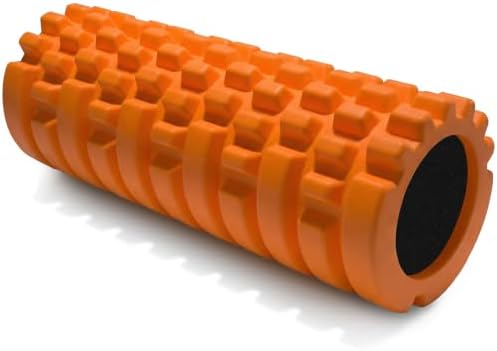
- PATENTED TECHNOLOGY: Relieve sore muscles, perform deep tissue massage and acupressure with our medium density massage r…
- SUPERIOR QUALITY: Our textured foam roller mimics the hands, fingers, and thumbs of a physical therapist, but in the pri…
- TARGETED RELIEF FROM PAINFUL ADHESIONS: Exceptionally suited for a comfortable yet effective deep tissue massage, our pr…
Textured grid foam rollers
Designed for deeper, targeted pressure. Start gently if you are new to rolling.

- High-density foam roller in Black
- Ideal for balance, strengthening, and flexibility exercises
- Firm, durable polypropylene maintains shape; molded edges for added comfort
Foam roller sets with a massage ball
Handy for small areas like the feet, shoulders and glutes that a roller cannot reach.

- Upgrade Your Recovery: Ditch those tennis balls in a sock—RAD Roller Original perfectly brackets your spine, maintaining…
- Enhanced Mobility & Relief: Medium-density silicone design grips the skin, delivering effective myofascial release to im…
- Comprehensive Relief: With over 20 targeted uses, this peanut roller addresses tightness and pain in key areas like the …

How to foam roll safely
- Warm up for a few minutes first with light movement.
- Roll slowly, about an inch per second, over the fleshy part of the muscle.
- When you find a tender spot, pause for 20 to 30 seconds and breathe.
- Avoid rolling directly on joints, bones or your lower back.
- Stop if you feel sharp pain, numbness or tingling.
Five simple moves to start
- Quads: Lie face down with the roller under your thighs and roll from hip to just above the knee.
- Calves: Sit with the roller under your calves and lift your hips.
- Glutes: Sit on the roller and cross one ankle over the opposite knee.
- Upper back: Lie on your back with the roller under your shoulder blades, hands behind your head.
- Lats: Lie on your side with the roller under your armpit.
Use these after a session like our full body home workout and finish with a few gentle stretches on a comfortable mat.

What to roll: a body-area guide
| Area | Technique | Watch out for |
|---|---|---|
| Quads | Face down, roll from hip to above the knee | Do not roll directly over the kneecap |
| Hamstrings | Sit with the roller under the back of your thighs | Keep your weight supported by your hands |
| Calves | Roller under calves, lift hips off floor | Cross one leg over the other for more pressure |
| Glutes | Sit on the roller and lean to one side | Avoid your tailbone |
| Upper back | Roller under shoulder blades, arms crossed | Do not roll your lower back |
| Lats | Lie on your side, arm overhead | Move slowly; it can be tender |
A 10-minute foam rolling routine
- Quads: 60 seconds each leg.
- Hamstrings: 60 seconds each leg.
- Calves: 60 seconds each leg.
- Glutes: 60 seconds each side.
- Upper back: 60 seconds.
Finish with a few minutes of gentle stretching.
Foam roller vs massage ball vs massage gun
| Tool | Best for | Cost |
|---|---|---|
| Foam roller | Large muscle groups, general recovery | Low |
| Massage ball | Small, specific spots like feet and shoulders | Very low |
| Massage gun | Targeted, quick relief and portability | Higher |
If you can only buy one, start with a roller. See our massage gun guide if you want a more targeted tool.
Common foam rolling mistakes
- Rolling too fast. Slow movement is more effective.
- Spending too long on one spot. Two minutes is plenty.
- Rolling directly over joints or bones.
- Using too much pressure when you are new.
- Holding your breath. Breathe steadily.
Frequently asked questions
How often should I foam roll?
Many people roll for five to ten minutes before or after workouts. Daily rolling is fine if it feels good and does not cause pain.
Should it hurt?
It can feel uncomfortable, but it should not be sharp or intense. If it hurts, ease off or use a softer roller.
Is a foam roller better than a massage gun?
They do different things. A roller is cheaper and good for broad areas. A massage gun is more targeted and portable.
Prices, availability and product details change often. Always check the current listing on Amazon before you buy.
Keep going
This article is for general information and is not medical advice. Check with a doctor before starting a new exercise program, especially if you have a health condition, an injury or are pregnant.