
Disclosure: some links on this page are Amazon affiliate links. If you buy through them, we may earn a small commission at no extra cost to you. Read our affiliate disclosure.
How we choose: we compare features, ratings and review volume on Amazon, and favor products that are widely available at the time of writing. We do not claim to have tested every product listed. Last updated: October 2026.
A good mat is the one piece of gear that almost every home workout uses. Planks, bridges, stretching, yoga flows and Pilates all happen on the floor, and a cheap, slippery mat makes each of them worse. This guide helps you find the best yoga mat for the way you actually train: thickness, material, grip, size and price.
Start with how you will use it
| If you mostly do… | Look for… |
|---|---|
| Yoga flows and balance poses | Strong grip, medium thickness (about 4–5 mm) |
| Strength and bodyweight workouts | Thicker cushioning (about 6–10 mm) and a dense surface |
| Pilates and floor core work | Comfortable cushioning for spine and hips |
| Travel or classes | Thin, light and foldable (about 1–3 mm) |
| Hot or sweaty workouts | A mat with good wet grip and an easy-to-clean surface |
Thickness: how much is right?
Most standard mats are around 4 to 6 millimetres. Thinner mats give you a better connection to the floor, which helps balance. Thicker mats protect your knees, wrists and spine, which helps if you do planks or lie on hard floors. If standing poses feel wobbly, go thinner. If your knees complain, go thicker.
Materials compared
| Material | Pros | Cons |
|---|---|---|
| PVC | Durable, affordable, good cushioning | Not biodegradable; can feel heavy |
| TPE | Lighter and often more eco-friendly than PVC | Can wear faster than PVC |
| Natural rubber | Excellent grip and cushioning | Heavier; can have a rubber smell; not for latex allergies |
| Cork | Grips better when you sweat; naturally antimicrobial | Can feel firmer; usually costs more |
| Polyurethane (PU) top layer | Good wet grip and feel | Needs careful cleaning; usually pricier |
Grip, size and extras
- Grip. Check whether the top is textured and whether reviews mention slipping when hands get sweaty.
- Length and width. Standard mats are about 68 inches long. If you are tall, look for extra-long versions.
- Weight. Heavy mats stay put but are harder to carry.
- Odor. Some new mats have a smell that fades after airing out.
- Carry strap or bag. Helpful if you take it to classes.
Yoga mat options to compare
These are well-known options across budgets. We have not tested them, so read recent reviews on each listing.
Gaiam Essentials and similar budget mats
Inexpensive, cushioned and a sensible starting point if you are not sure how often you will use it.

- ALIGNMENT YOGA MAT: 6mm thick premium yoga mat offers an alignment system that is printed on the mat to help keep you in…
- STICKY NON-SLIP TEXTURE: Yoga mat features a textured sticky non-slip surface for excellent traction and superior grip
- NON TOXIC & 6P FREE PVC yoga mat is a healthier choice for you and the planet and free of DEHP, DBP, BBP, DINP, DIDP and…
Manduka PRO and other premium mats
A dense, durable mat that many serious practitioners use. It is heavy and costs more, but is built to last.

- PVC
- Imported
- LEGENDARY DURABILITY & STABILITY: The original Manduka PRO mat, trusted by teachers worldwide, delivers unmatched stabil…
Extra-thick exercise mats
If you do mostly floor core and strength work, a thick mat (around 10 mm) can be gentler on your joints.

- EXTRA THICK YOGA MAT: These 0.6 inches (15mm) exercise mats gives you good cushioning without sacrificing stability. Say…
- DIMENSIONS: 72 x 32 x 0.6 inches (185cm x 80cm x 15mm). Longer and wider than regular yoga mats, ideal for almost everyo…
- EXTRA WIDE EXERCISE MAT: This Extra wide yoga mat is great for all types of fitness and exercise routines including yoga…
Natural rubber or cork yoga mats
A good choice for strong grip, especially if your hands sweat. Check for materials you may be allergic to.
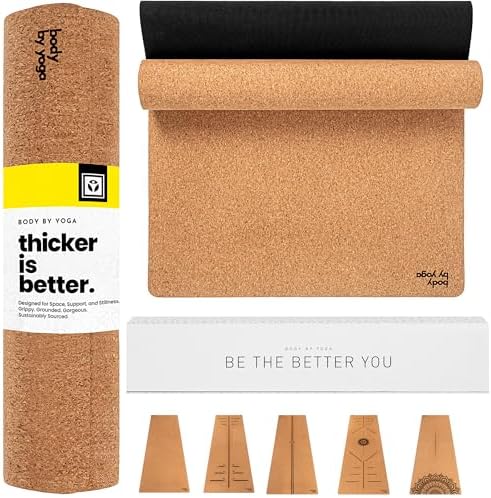
- CREATED BY YOGA INSTRUCTORS – Designed from years of teaching experience, this mat delivers exactly what yogis need: rel…
- NON SLIP GRIP – The natural cork surface becomes more grippy with moisture, helping you stay stable through even the swe…
- PREMIUM CORK – Most cork mats have a layer of cork as razor-thin as sandpaper. Our cork layer is significantly thicker t…
How to clean your mat
- Wipe it down with a damp cloth after each use.
- Once a week, use mild soap and water or a mat-safe spray.
- Let it air dry fully, away from direct sun, before rolling it up.
- Avoid harsh chemicals that can break down the surface.
When to replace your mat
Replace it when the surface is peeling, it no longer grips, it has compressed flat in the spots you use most, or it has started to smell even after cleaning.
A 15-minute beginner mat routine
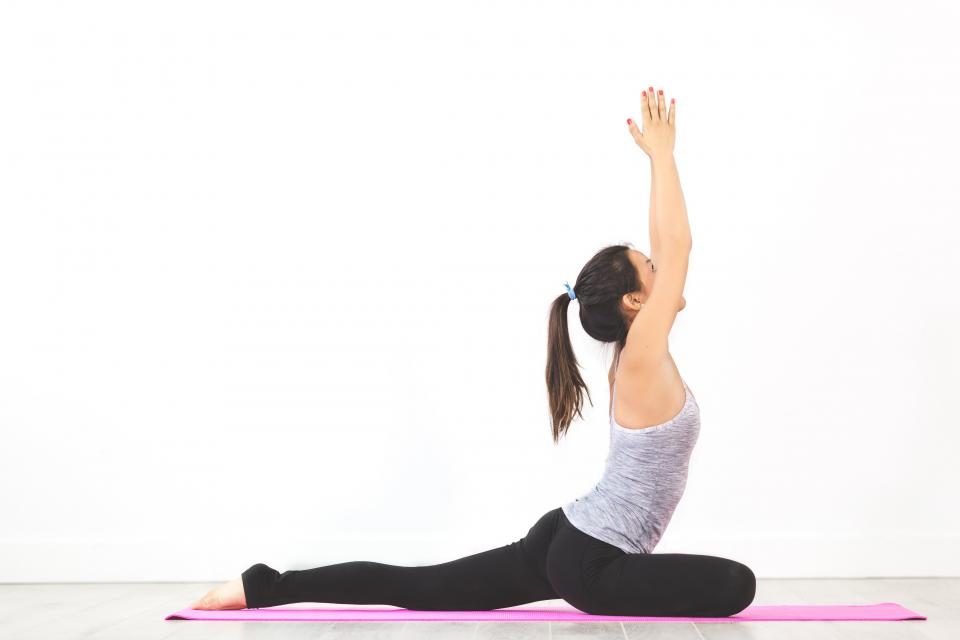
Use this sequence to break in a new mat and learn how it grips. Move slowly and breathe through your nose.
| Move | Time | Notes |
|---|---|---|
| Cat-cow | 1 minute | Warms up spine and wrists |
| Downward dog | 1 minute | Press hands evenly into the mat |
| Low lunge (each side) | 1 minute each | Check that your front foot does not slip |
| Cobra | 45 seconds | Keep hips on the mat |
| Child pose | 1 minute | Rest and breathe |
| Bridge | 1 minute | Feet flat, press through heels |
| Supine twist (each side) | 1 minute each | Let your shoulders stay grounded |
| Final rest | 2 minutes | Lie on your back and relax |
Yoga mat accessories worth considering
- Yoga blocks: help you reach the floor in standing and seated poses.
- Strap: useful for hamstring and shoulder stretches.
- Mat towel: adds grip in hot or sweaty sessions.
- Carry strap or bag: makes classes and travel easier.
Mistakes people make when buying a mat
- Buying the thinnest mat for the lowest price, then finding it hurts on hard floors.
- Ignoring length. Tall people often need an extra-long mat.
- Choosing based on color rather than grip.
- Forgetting that a new mat may be slippery for the first few sessions until it is broken in.
- Not checking the material if you have latex allergies.
Yoga mat vs exercise mat
A yoga mat is thinner and grippier, designed for standing balance. An exercise mat is thicker and softer, built for floor work such as planks, sit-ups and stretching. If you do both, choose a mat of about 6 mm or use a thicker mat for strength days.
Frequently asked questions
Can I use a yoga mat for home workouts?
Yes. A thicker mat is more comfortable for planks, bridges and core work. Try one of the routines in our beginner workout guide.
What is the best thickness for a beginner?
Around 5 to 6 mm is a comfortable all-round choice, and still gives enough floor feel for balance.
Is a more expensive mat worth it?
If you use it several times a week, a durable mat with better grip is worth it. For occasional use, a budget mat is fine.
Prices, availability and product details change often. Always check the current listing on Amazon before you buy.
Keep going
- Home workouts for beginners
- Best foam roller
- Full body home workout
- Best home gym equipment for small spaces
This article is for general information and is not medical advice. Check with a doctor before starting a new exercise program, especially if you have a health condition, an injury or are pregnant.