A weighted vest is a simple way to make walking, bodyweight workouts and everyday movement harder without buying a whole home gym. Importantly, it spreads extra weight across your torso, so it feels more natural than carrying dumbbells. In this guide we explain how to choose a weighted vest, how much weight to start with and which options are worth comparing.
Disclosure: some links on this page are Amazon affiliate links. If you buy through them, we may earn a small commission at no extra cost to you. Read our affiliate disclosure.
How we choose: we compare features, ratings and review volume on Amazon, and favor products that are widely available at the time of writing. We do not claim to have tested every product listed. Last updated: October 2026. That is how we shortlist each weighted vest option in this guide.

Weighted vest: what to look for
- Adjustable weight. Also, vests with removable weights let you start light and add more over time, so they are usually the better long-term buy.
- Fit and comfort. Look for padded shoulders and adjustable straps, because a vest that bounces or rubs is hard to wear for long.
- Weight range. In addition, most beginners do well with 5 to 12 pounds, while stronger lifters may want 20 pounds or more.
- Build quality. Strong stitching and solid buckles matter, since the vest carries weight every session.
- Breathability. Likewise, a mesh lining helps in warm weather, however thicker padding feels better with heavy loads.
Top weighted vest to compare
Here are the weighted vest options we would compare first. In general, each one is popular on Amazon, and they cover light, mid-range and heavy use.
Best for most people: adjustable vest with 6 to 12 pounds
This is one of the most-reviewed vests we found. Typically, the weights are removable, so you can start light for walks and add more as you get stronger.
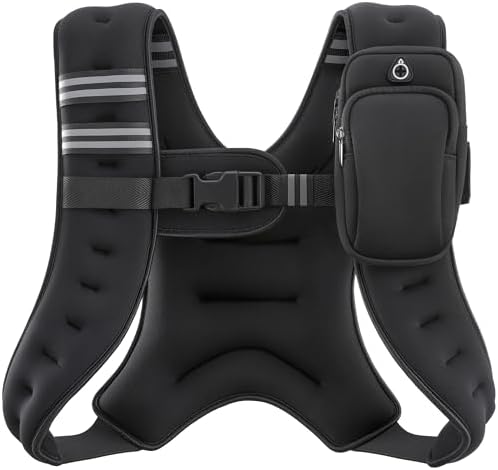
- Faster Fitness Gains: Zelus weighted vests (6/8/12/16/20/25/30 lb) feature evenly distributed iron sand to add extra res…
- One Size Fits Most: Our weighted vest for women and men is equipped with adjustable buckle straps that offer a snug fit …
- Comfort That Lasts: Enjoy lasting comfort with the soft yet wear-resistant spandex fabric, designed to endure even the t…
Best for heavier training: CAP adjustable vest
If you want to go well beyond 12 pounds, this vest supports much higher loads. Also, it suits strength work and rucking, though it is bulkier to wear.

- ADJUSTABLE 20 LB WEIGHTED VEST FOR PROGRESSIVE TRAINING – Customize your resistance with this adjustable weighted vest (…
- BOOST STRENGTH WORKOUTS & CARDIO PERFORMANCE – Add resistance to running, walking, and workouts to increase calorie burn…
- SECURE COMFORTABLE FIT – Designed to distribute weight evenly with fully adjustable waist belt and padded shoulders for …
Best budget option: Henkelion weighted vest
A low-cost way to try a weighted vest before you commit. In addition, it is a sensible pick for short walks and bodyweight circuits.

- ATTENTION – The elastic of this vest should be at the waist. Please look carefully at the direction of wear on the pictu…
- IRON PELLETS & METAL ROCK – Henkelion weighted vest is filled with premium iron pellets and metal rock rather than using…
- ERGONOMIC DESIGN & BALANCED WEIGHT – This weight vest is distributed weight throughout your body, including an adjustabl…

Quick comparison of weighted vest
| Type | Best for | Watch out for |
|---|---|---|
| Adjustable vest | Beginners and progression | Weights can shift if packed badly |
| Heavy-duty vest | Strength work and rucking | Bulkier and costs more |
| Budget vest | Trying the idea cheaply | Basic padding and straps |
How to start with a weighted vest
More weight is not always better. First, learn how the vest feels, then build up slowly.
- Begin with 5 to 10 percent of your body weight. This keeps your posture and joints comfortable.
- Start with walking. Importantly, wear the vest for 20 to 30 minutes before you try harder moves.
- Add it to bodyweight exercises. Squats, lunges and push ups all become more challenging.
- Increase gradually. In general, add a small amount every week or two, and stop if you feel pain.
A weighted vest works best inside a plan, so try it with our home workout plan. Also, if you have joint, back or heart concerns, talk to a doctor first.
Frequently asked questions
How heavy should a weighted vest be? Most people start with about 5 to 10 percent of their body weight. Likewise, you can build up slowly as your body adapts.
Can I run with a weighted vest? You can, but it raises the impact on your joints. Therefore, start with walking and add running only if it feels comfortable.
Is a weighted vest good for weight loss? It increases the effort of walking, so you burn a little more energy. However, results still depend mostly on food, sleep and consistency.
Keep going
Want more ways to train at home? Importantly, read our adjustable dumbbells guide and our pull up bar guide. Whichever weighted vest you pick, the right fit matters more than the brand. In general, for general guidance, see the CDC physical activity guidelines for adults.